
How to evaluate a design portfolio
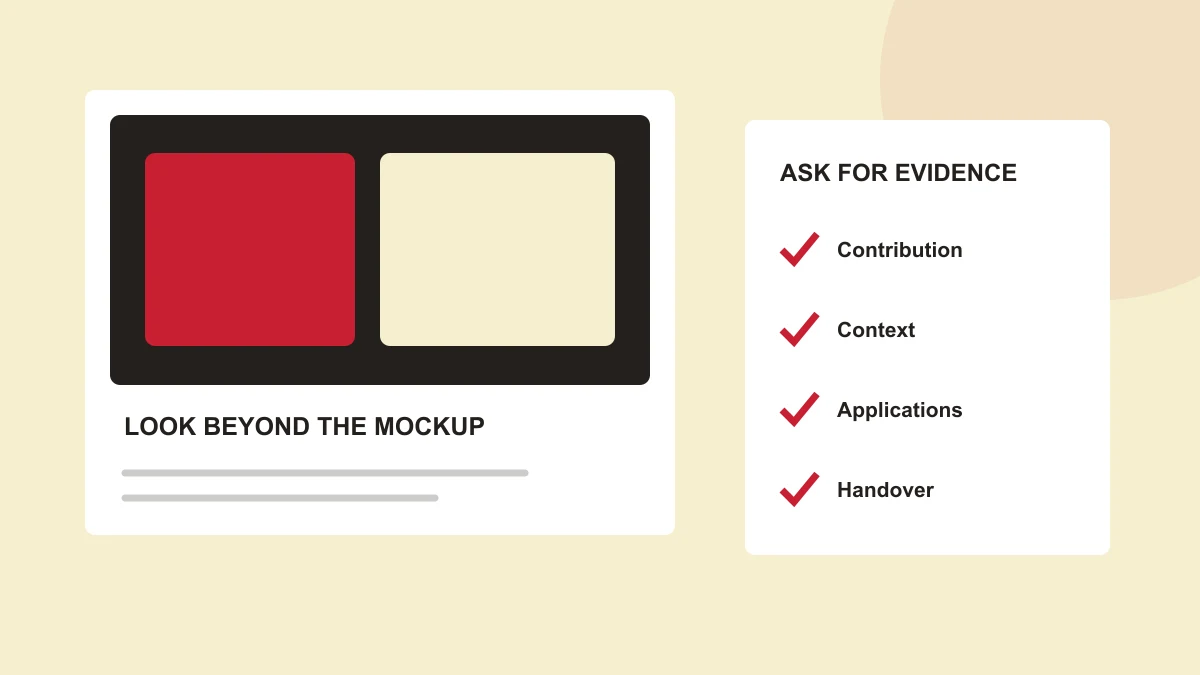
Look beyond an attractive mockup. Use the work to ask better questions about contribution, practical detail and project fit.
1. Look for work that helps you assess fit
A design portfolio should help you decide whether a studio’s experience and approach fit your project. Attractive images matter, but they are only the beginning. Look for enough context to understand what was designed, who it serves and how it is used.
You do not need to find a project identical to yours. A studio may show relevant experience through information hierarchy, technical requirements or the type of application. A menu and a product pack, for example, are different formats but both require careful organization of dense information.
2. Ask what the studio actually contributed
A finished website may include work by a designer, developer, copywriter, photographer and the client’s own team. A portfolio should make the contribution understandable. When it does not, ask directly.
Scroll horizontally to compare all columns.
| Ask this | What it clarifies |
|---|---|
| Which parts of this project did you design or build? | The studio’s contribution and any collaborators. |
| Was this a concept, a mockup or completed client work? | The status of the work being shown. |
| Which parts can I see in use? | Whether there are live pages, printed materials or application photographs. |
| What was included in the handover? | How the client could use or maintain the work afterwards. |
A mockup is a useful way to present an idea or artwork. It is not evidence that an item was manufactured, installed or delivered in the setting shown. Equally, a live website is useful evidence of implementation, but it does not establish who was responsible for every feature.
3. Examine the information, not only the styling
For websites, look at navigation, service explanations and contact routes. Try a relevant page on your phone. Can you tell what the business offers and what to do next? For print and packaging, look at the hierarchy between the name, product or service information and practical details.
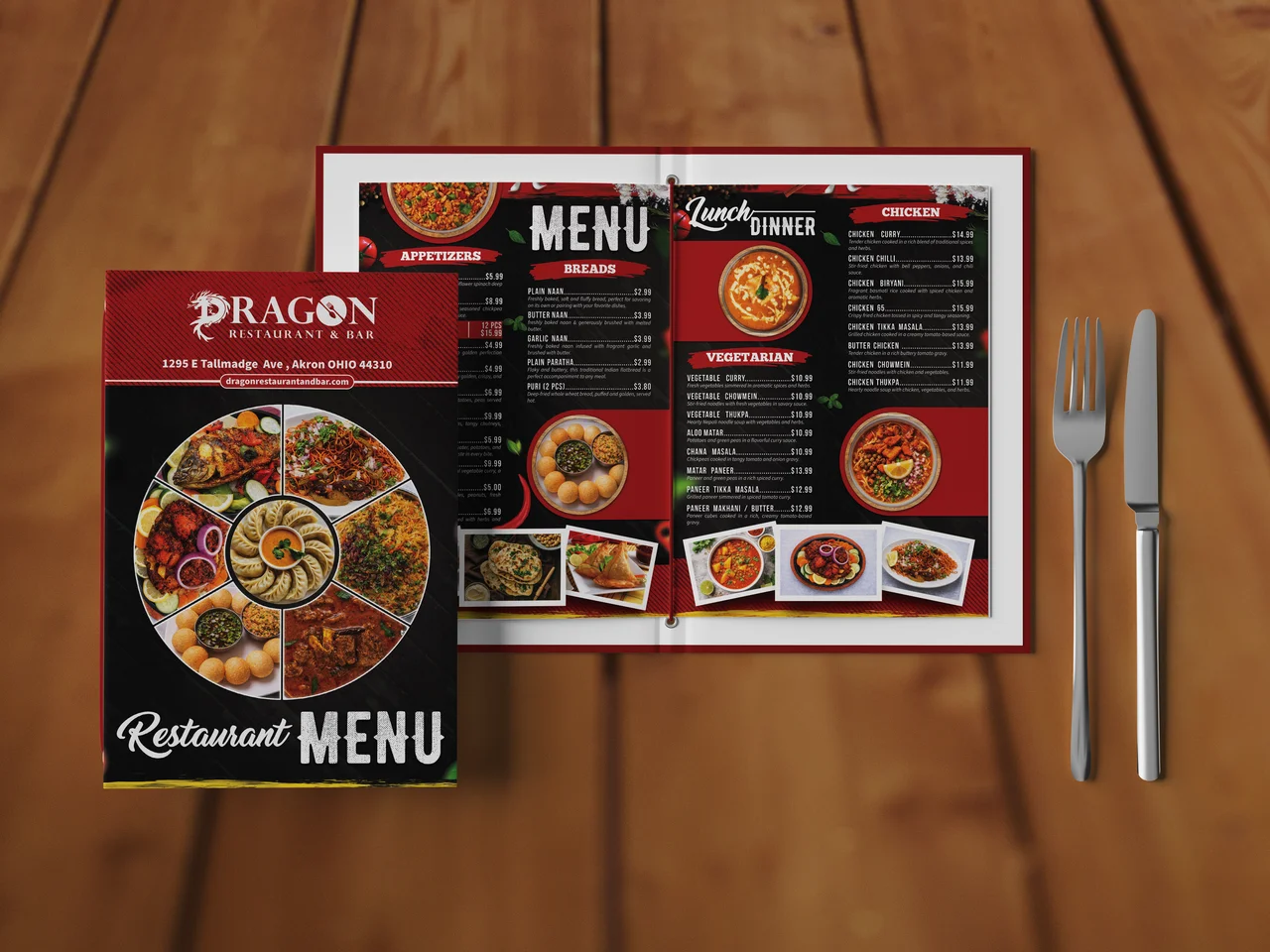
Notice whether the identity carries through different applications without becoming repetitive. A large brand mark on a mockup can be effective, but smaller text, ordinary content and secondary pages often reveal more about the system.
Use the project’s actual format as the test. A vehicle graphic needs a different hierarchy from a business card. A service website needs a different path from a restaurant menu. Good evaluation starts with those differences.
4. Separate an outcome claim from evidence
A portfolio can demonstrate design choices and completed materials without claiming a business result. If a case study mentions increased enquiries, sales or visibility, ask how the result was measured, over what period and what else changed.
A claim without that context should not carry the same weight as a specific, verifiable explanation. Be equally careful about assuming that a visual refresh alone caused an improvement. Marketing activity, pricing, the offer and operational changes may also affect business results.
Scroll horizontally to compare all columns.
| What you see | What it supports | What it does not establish |
|---|---|---|
| A polished website presentation | The visible interface and visual direction | Traffic, conversions or sales |
| A packaging mockup | Artwork composition and application intent | Production, distribution or commercial performance |
| A clear project scope | The stated deliverables and contribution | Unstated services or ongoing support |
| A live website link | The site is accessible when checked | That every current feature was part of the original engagement |
5. Use the portfolio to start a better project conversation
Explain which examples you selected and why. “We like how the service pages make the offer easy to understand” is more useful than “we want this exact layout.” It tells the studio which problem you want the design to solve.
- Share the audience and main problem you want to address.
- Identify the examples that are relevant, and the specific reasons.
- Ask how the scope would differ for your business.
- Discuss content responsibilities, review stages and deliverables.
- Confirm editing, files, access and support expectations before committing.
Use the evaluation worksheet to compare the same questions across your shortlist. It is a conversation aid, not a numerical ranking system: one relevant, clearly explained project may tell you more than a large gallery.
You can apply those questions to 6B’s own portfolio. Explore the individual project pages, check the named applications and ask us about the parts that matter to your brief. Clear scope is the basis for a useful proposal.
A useful next step
Put the guide to work.
Download the plain-text worksheet, copy it into your preferred document editor and fill it in at your own pace. No email address required.
Download the portfolio evaluation worksheet